Protecting Generations of Farming in Caswell County
March 2026
“It’s hard work. When there’s three feet of snow, we’re still gonna drag those buckets out and feed those calves. It’s crazy but you do it,” says Sara Broadwell, recalling the daily rhythms of farm life.
It’s this dedication, come rain, shine, or snow, that has kept the Broadwell family’s land, called Catbriar Farm, productive and cared for over decades.
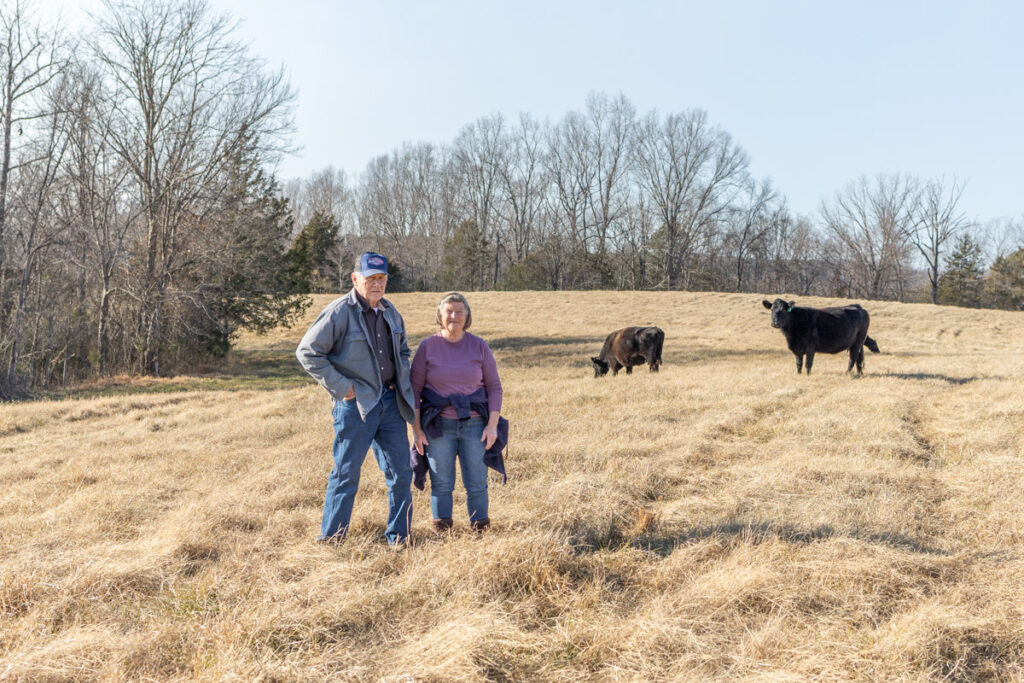
Graham and Sara Broadwell pictured in one of the many hilltop pastures where they graze their cows at Catbriar Farm.
Our Largest Farm Protected Since 2018
On December 16, 2025, Piedmont Land Conservancy protected 350 acres of Catbriar Farm with a permanent conservation easement in partnership with landowners Sara and Graham Boardwell, and the NC Agricultural Development and Farmland Preservation Trust Fund. This project marks PLC’s largest farmland protection effort since 2018. Catbriar Farm is located in Caswell County, just north of Yanceyville.
Roughly 100 acres of the property are fenced pasture, while the remaining 250 acres are wooded, offering space for wildlife and nature to thrive. Turkeys, otters, deer, countless birds, and more move through these lands, making Catbriar Farm not only a working landscape, but also a haven for nature.
The land itself is striking. Thick grass coats the rolling hills, and small creeks wind quietly through the forested edges. Even in winter, the farm feels alive with soft mourning dove calls carrying across the fields, a distant woodpecker tapping steadily, and the shadow of a red-shouldered hawk gliding overhead.
Piedmont Land Conservancy partnered with the NC Agricultural Development and Farmland Preservation Trust Fund to secure grant funding for this project. In addition, the Broadwells donated a portion of the easement value and made a generous contribution to Piedmont Land Conservancy’s stewardship endowment, reinforcing their commitment to the land’s permanent protection. Together, these investments will support the Broadwells as they continue stewarding their farm and ensure Catbriar Farm remains productive, protected, and cared for well into the future.
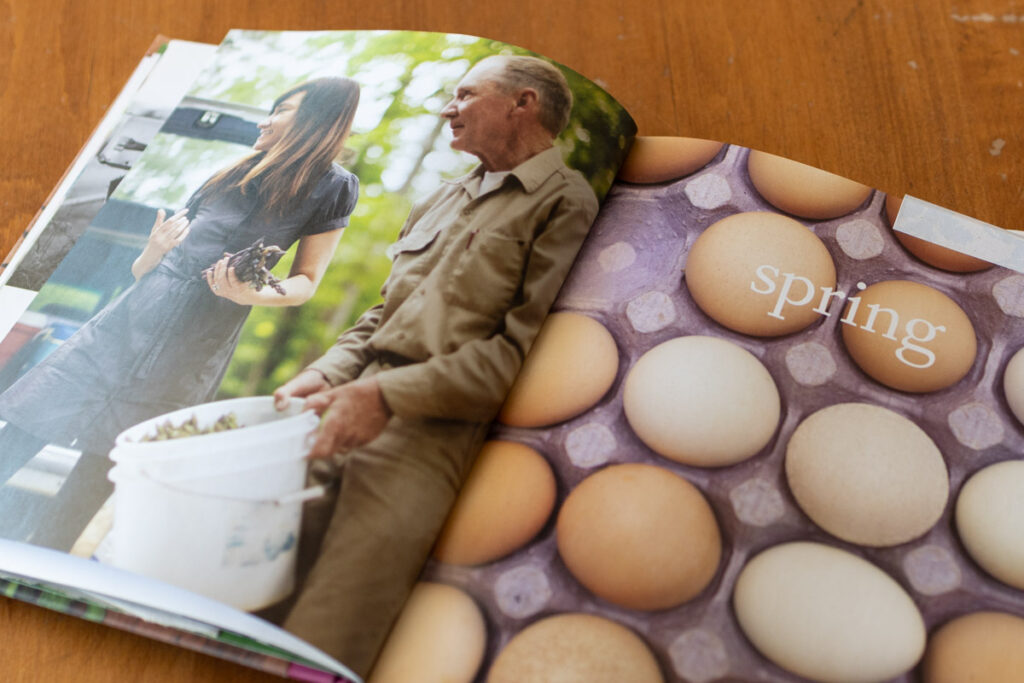
In 2011, Graham, and the farm’s beautiful asparagus, were featured in Cooking in the Moment: A Year of Seasonal Recipes by Andrea Reusing.
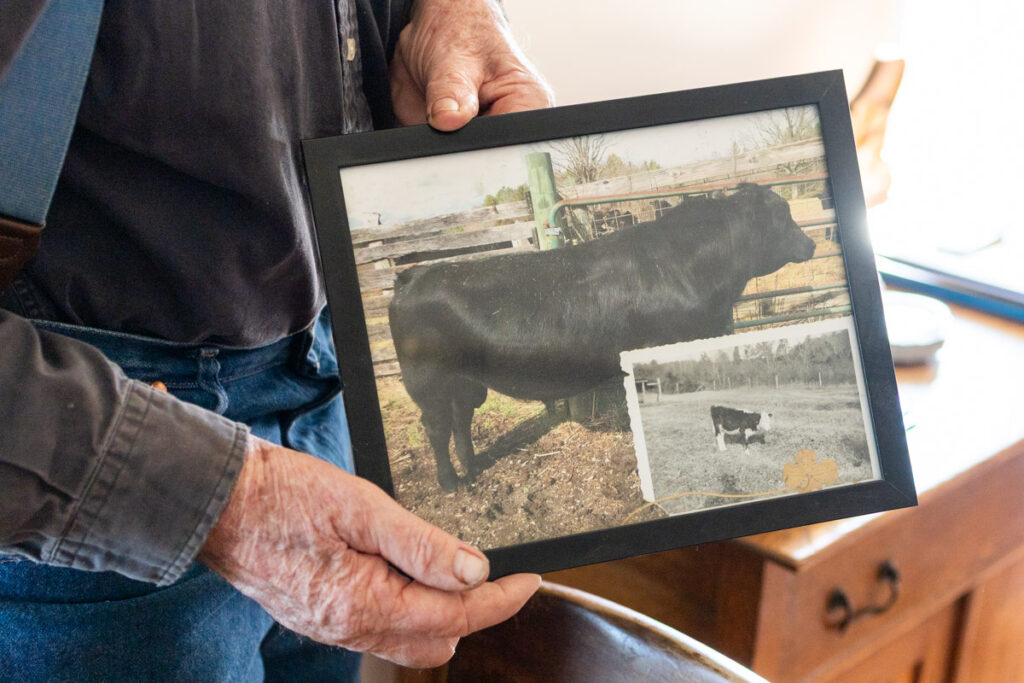
Graham Broadwell holds a frame with two photos: In black and white, the first bull he ever owned, and in color, the most recent bull.
A Legacy for the Future
For Graham Broadwell, the easement is about more than land. It’s about peace of mind.
“Generations in the future, this land will still be open for farming,” he says. “It may be row crops or a tree farm, but it will never be paved over. I won’t know them, but someone who wants to farm will be able to, because this land is here.”
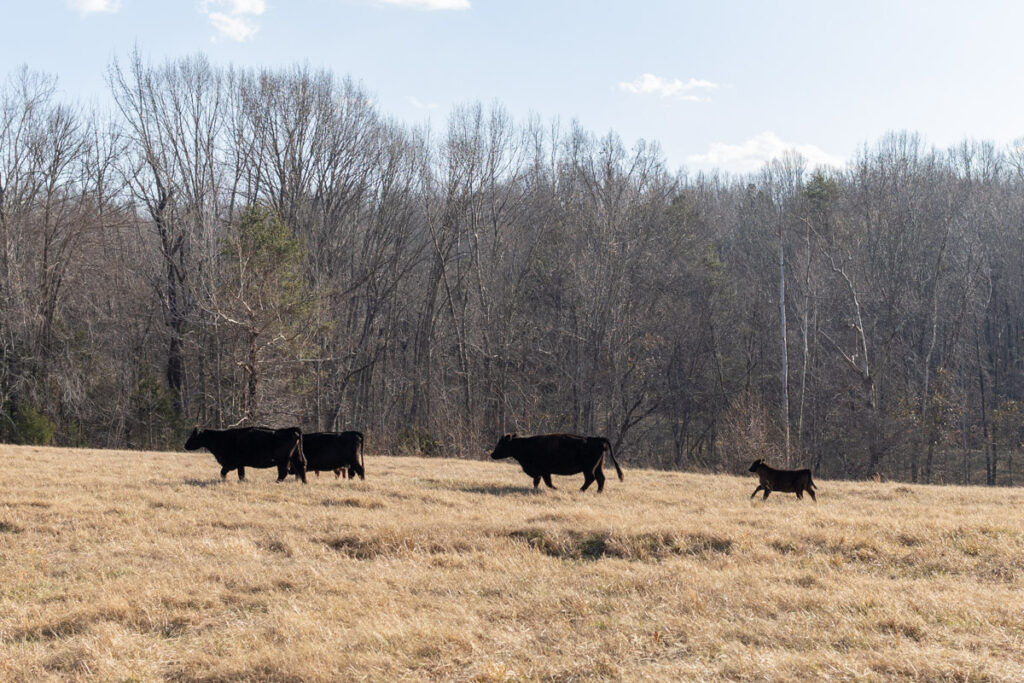
Landowners Sara and Graham Broadwell purchased the first parcel of their farm in 1978 and, over time, added neighboring tracts to create the 350-acre working farm they manage today. Once primarily a tobacco farm, the land has evolved with them. Today, more than 200 acres are managed under a forest management plan, while the remaining acreage supports cows, hay, and vegetables.
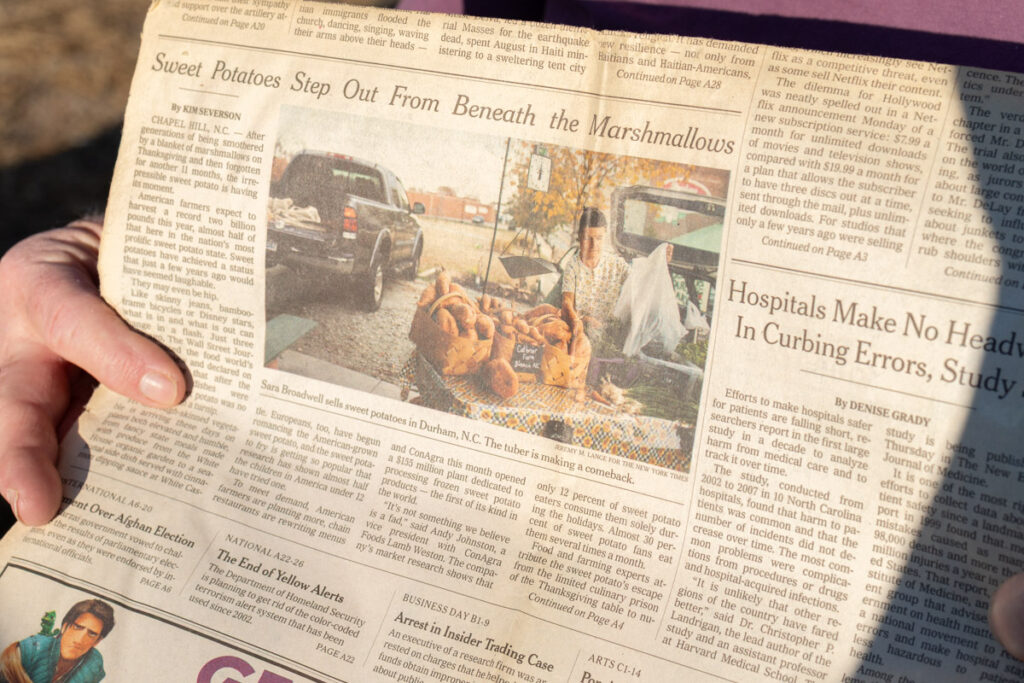
One day a friend called to tell Sara that she was on the front cover of the New York Times selling their Catbriar sweet potatoes at the Durham Farmers Market.
Over the years, the Broadwells have raised just about everything: chickens, sheep, and even milking goats, before settling on cows. As Sara puts it, cows are “not escape artists like goats, and not as helpless as sheep.” They’ve produced square bales and horse hay and sold their products at both the Caswell and Durham Farmers Markets. At one point, their sweet potatoes even landed them on the front page of The New York Times in a story about the sweet potato comeback.
Why this Farm Matters
Even in rural Caswell County, the Broadwells have witnessed the decline of family farms. “This road used to be dairy after dairy. Now there’s not a single dairy left in the county,” Graham notes. Protecting this farmland ensures that agriculture remains a part of the landscape for generations to come. The property contains prime and state-important farmland soils, more than 7,600 linear feet of streams, and vital habitats for wildlife, all underscoring its conservation significance.
“We always wanted to keep this farm a farm, long after we were gone,” Sara says. “When we learned that there was a local group, Piedmont Land Conservancy, that could actually help us do that, we jumped on the chance.” Graham adds, “You can’t be in a hurry, but it’s worth the wait.”
With this conservation easement, the Broadwells have secured a legacy that honors both their family and the broader farming community: land that will remain a working farm, a home for wildlife, and a source of inspiration for generations to come.