As we dreamed about restoring rare Piedmont prairie habitat at two of our preserves, we had two questions for Mike Santucci, our Preserve Manager:
How do we bring a prairie back?
How do we keep it healthy?
“Short of reintroducing bison,” he said, “The next best tool is fire.”
This spring, Piedmont Land Conservancy worked with Firefly Land Management, LLC to put that idea into action. We carried out prescribed burns on 27 acres at the future Bashavia Creek Preserve and on 19 acres at Caraway Creek Preserve. Completed in March, we finished both burns just before the state’s burn ban took effect
At Bashavia
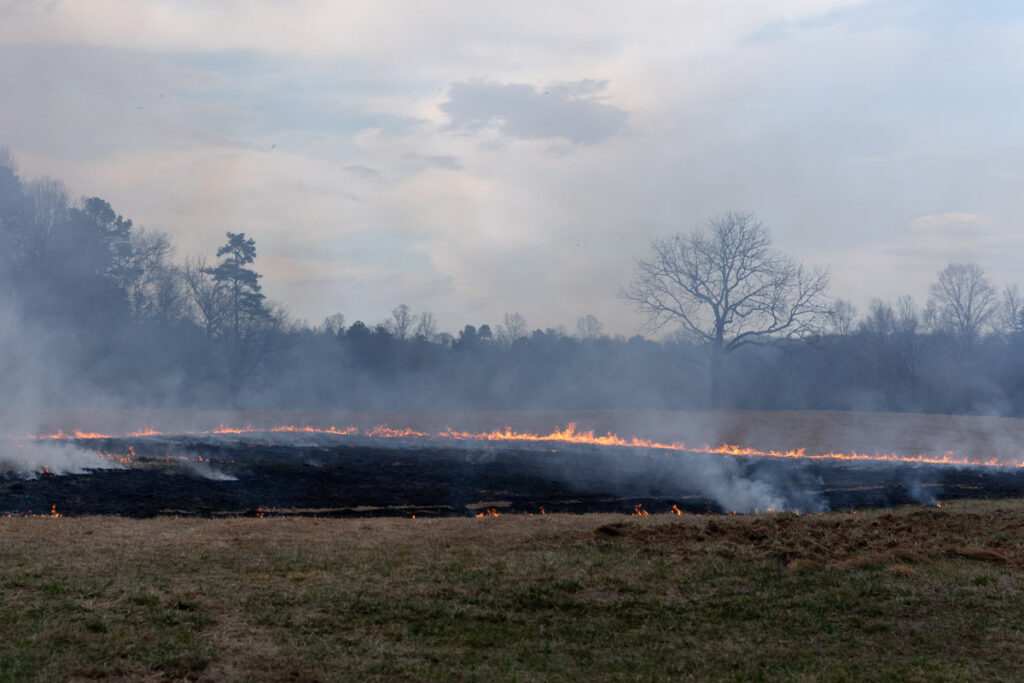
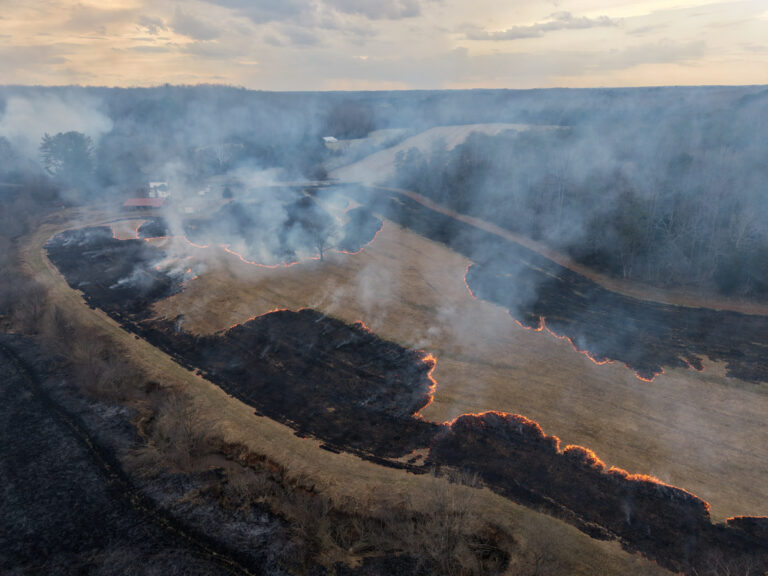
On March 6, our crews managed a controlled burn on 2 acres of woods and 25 acres of open field, where we are restoring Piedmont prairie. This is a fire-dependent habitat, meaning it relies on regular fire to stay healthy, and it is one of the most rare in the region. For thousands of years, fire from lightning and from Indigenous communities, and grazing by elk and bison kept these grasslands open. Our March burn cleared away old growth and woke up the seedbank, the store of dormant native seeds resting in the soil.
Fire creeps along the open fields at Bashavia on March 6th
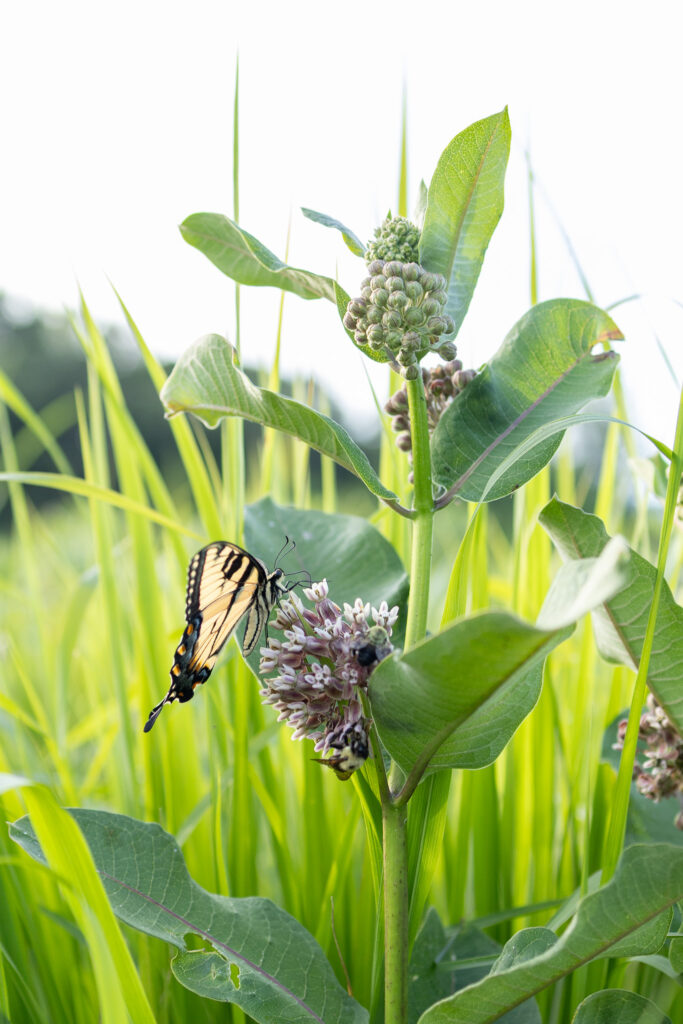
Nearly four months later, the big fields are full of life. Native warm-season grasses and multiple species of milkweed cover the ground. Take a step and five grasshoppers shoot out from the grass in front of you. Bees move from flower to flower, and butterflies drift overhead. Indigo buntings and eastern towhees work the edges of the field, and eastern bluebirds are everywhere (helped along by the 23 bluebird nest boxes now placed in the fields, along with 10 brown-headed nuthatch nest boxes). A healthy, living habitat is taking hold.
An Eastern Tiger Swallowtail feeds on the sweet nectar in Common Milkweed flower clusters in the restored piedmont prairie at Bashavia Creek Preserve
At Caraway
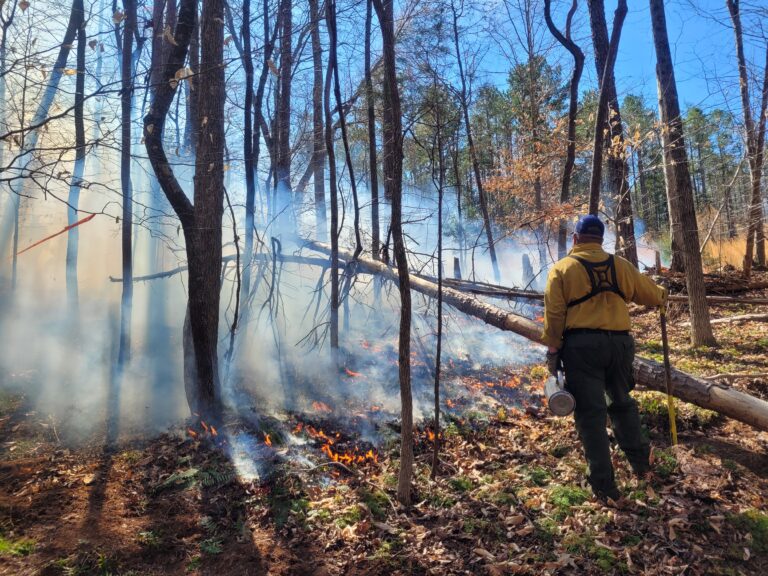
On March 20, our crews burned 19 acres at Caraway Creek Preserve to refresh the meadows and keep the oak and hickory woods healthy. We also applied fire on the loblolly pine stand at the front of the preserve.
The early results are encouraging. In the meadows, native grasses like bluestem and broomsedge are sprouting, and the burn cleared away the built-up dead grass, opening bare ground that ground-foraging birds rely on.
In the pine stand, our goal is to gradually encourage more oak and hickory trees to take hold. Young oaks need sunlight and bare soil to get started, and the fire provided both: it let far more light reach the forest floor, from about 10 percent before the burn to 75 percent after, and it burned off the thick layer of fallen needles so acorns can settle into the ground. A few young oaks are already coming up.
Staff from Firefly Land Management, LLC monitors the prescribed fire as is creeps down a wooded hillside at Caraway Creek Preserve
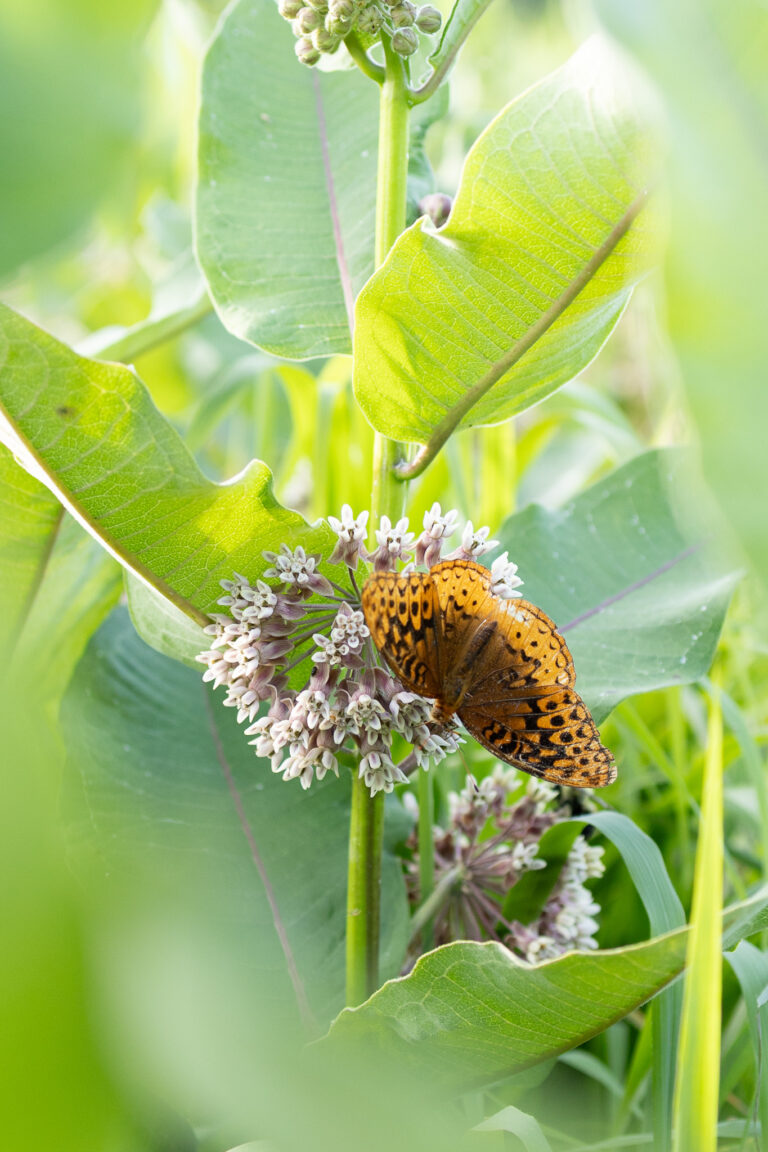
A Spangled Fritillary Butterfly on Common Milkweed at Bashavia Creek Preserve
Why Fire
Low intensity and periodic burns do several useful things:
Most importantly, they restore a natural cycle of fire these lands evolved with to stay healthy, but have long gone without.
Additionally, fire returns nutrients to the soil and spurs the leafy new growth, all building a more diverse landscape.
It also clears out built-up dead material, so if a wildfire ever does break out, it burns far less intensely.
Fire is one of the oldest and most effective land-stewardship tools we have, and the life now flourishing on these treated lands is an early sign of what it can do. We plan to keep applying good fire across our preserves where it makes sense. A fall burn is planned at Caraway, and over time we’ll bring more of our properties into the program as conditions allow.
An aerial view of fire moving to meet in the middle of a big field at Bashavia Creek Preserve