Honoring Heritage & Protecting North Carolina’s Agricultural Future
Seventy-five acres protected through a conservation easement donated by the Bunker descendants.
January 2026
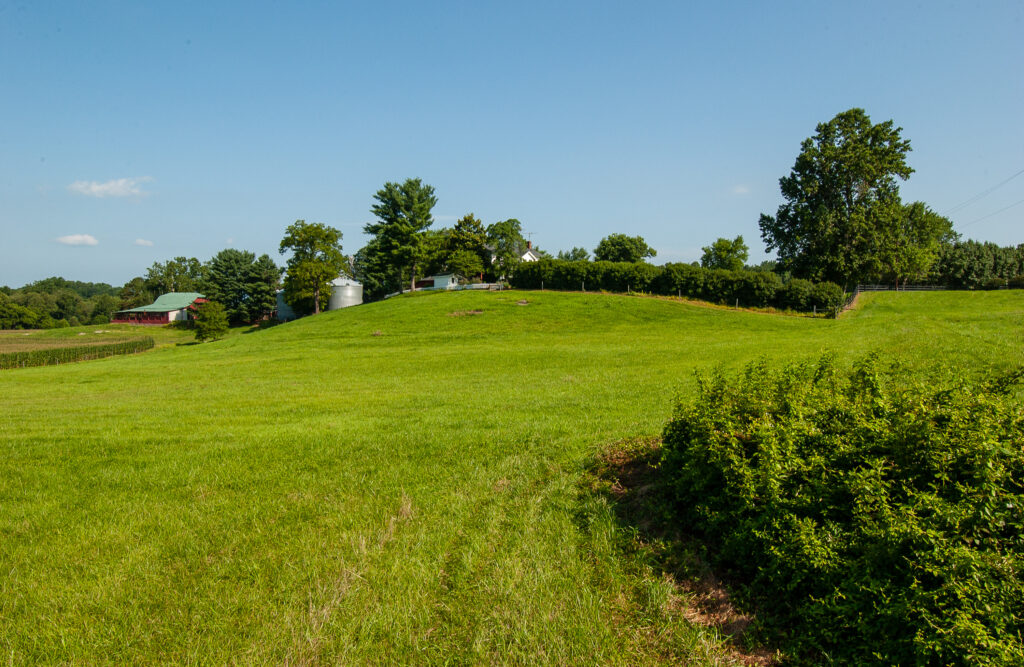
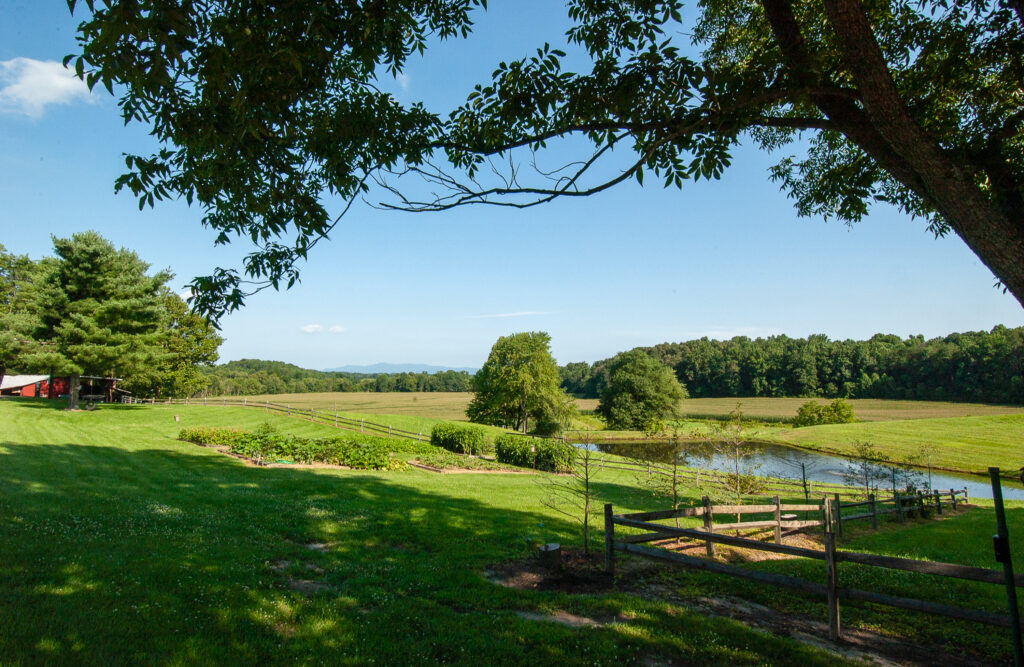
Driving south out of Mt. Airy, NC on Highway 601, you move through a corridor of commercial sprawl with stoplights and strip malls, until, just before Stewart’s Creek, everything changes. In a blink, pavement gives way to open sky and rolling fields. Acres of corn sway across the hills, next to classic barn silhouettes and the forested rise of the Blue Ridge Mountains in the distance.
This is Hollyview Farm, a storied landscape, rich with history and now permanently protected for agriculture.
Hollyview Farm. Image by Hobart Jones.
Protected Forever Through Family Generosity
With development accelerating around them, landowners and sisters Dottie Sykes and Alex Sink chose to donate a conservation easement to Piedmont Land Conservancy, finalized on December 30, 2025. This legal agreement guarantees that these 75 acres of working farmland will never be developed or divided. It will remain a place for food, farming, and connection to North Carolina’s agricultural roots, forever.
“This farm is significant to more than just us, it’s hallowed ground to many others. We always knew it was our responsibility to protect it."
Dottie Sykes
Landowner
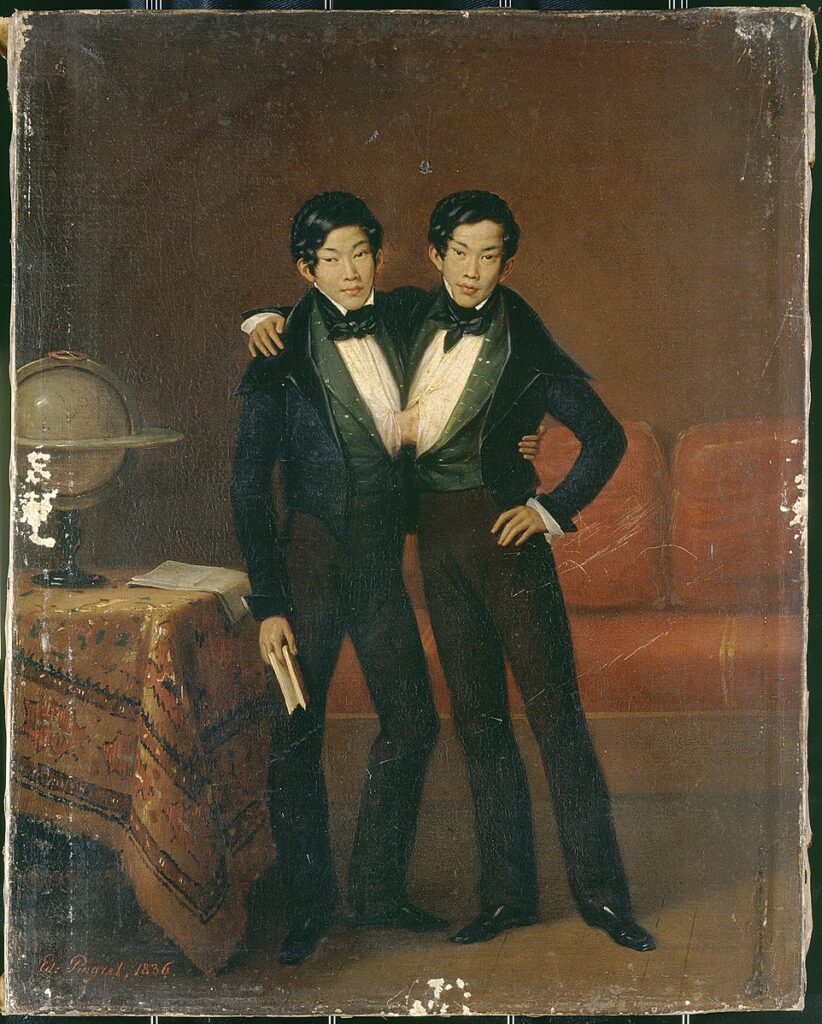
Chang and Eng Bunker, at age 25 in 1836. Oil painting by Edouard-Henri-Théophile Pingret.
A Legacy Connected to the World
Dottie and Alex are descendants of a remarkable lineage. They are the great-granddaughters of Chang Bunker, one half of the famous conjoined “Siamese Twins,” Chang and Eng Bunker, who came from what was then Siam (now Thailand) in the early 1800s.
Touring across the U.S., Canada, and Europe, Chang and Eng became globally known figures, whose story has since been portrayed in novels, musicals, and films. They ultimately settled in Mt. Airy where they purchased land, farmed, and raised large families. They were the first Thai people to become naturalized American citizens, becoming cultural bridges between nations long before formal diplomatic relations existed. Today, they remain a source of national pride for many Thai people.
Their lives, while celebrated, also include complex history, such as their ownership of enslaved people, which Thai scholars and the Bunker descendants acknowledge as part of the full and honest legacy. Today, descendants of Chang and Eng host an annual reunion each July, often attended by the Thai Ambassador, recognizing the profound cultural significance rooted in this North Carolina soil.
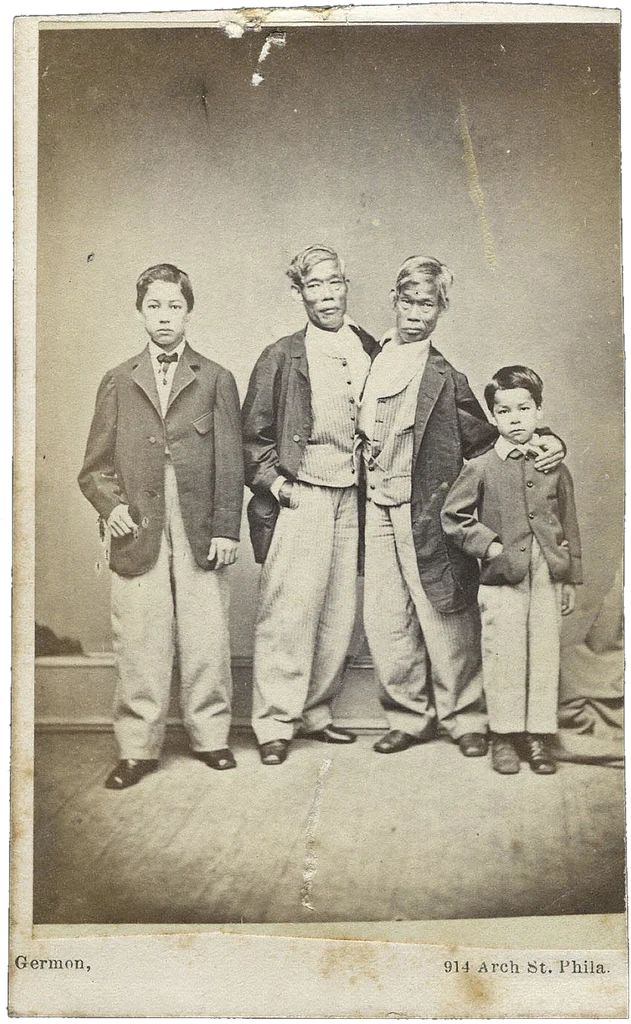
L to R: Patrick Henry Bunker, Eng Bunker, Chang Bunker, and Albert Bunker. Sisters Alex and Dottie are great-granddaughters of Chang, and granddaughters of Albert. North Carolina Collection Photographic Archives.
A Childhood Shaped by the Land
For Dottie and Alex, Hollyview Farm was simply home, until they understood its deeper meaning. They spent their childhood roaming the farm: biking and riding horses around the fields, sledding every hill, running a pretend K&W Cafeteria out of the playhouse, and even assisting with handing tobacco and late-night piglet births in the farrowing house.
Their perspective of the land first shifted when a group from Thailand contacted the family and asked to visit. When they arrived, Alex remembers watching them step onto the land. They were emotional, reverent, and mesmerized. “It was one of the first times I was seeing our home through someone else’s eyes. To stand on this land meant so much to them,” remarked Alex.
Why Protect Farmland Now?
North Carolina is losing farmland at an alarming rate. American Farmland Trust’s Farms Under Threat 2040 report, estimates that North Carolina is projected to lose the second-most agricultural land in the country by 2040, with an estimated 1.1–1.2 million acres of farmland converted to development under current trends, trailing only Texas in total acres lost. Preserving agricultural land is essential to maintain food security, sustain rural economies, and protect the landscapes that define our state.
Hollyview Farm is not only historically significant, it is exceptional farmland. A few years ago, this protected acreage was recognized as some of the highest–yielding corn land in the Yadkin River Valley, producing 300 bushels per acre.
In 1960, the Progressive Farmer Magazine named the Sink family as the “Master Farm Family” for North Carolina. This was a rare honor, and a joint effort between the magazine and the North Carolina Cooperative Extension Service to recognize families who exemplified high standards in farm operations, home life, and community citizenship. The Bunkers were recognized for their success in farming and their contributions to rural life.
Today, the Johnson family, respected farmers known for their thoughtful practices, leases and stewards the land.
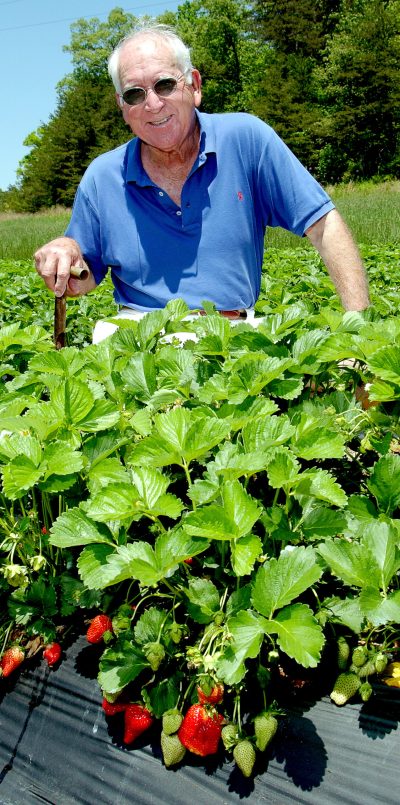
The sisters’ father, Kester Sink, was a lifelong farmer, pioneering erosion control, seed corn production, and early hog farming. According to Dottie and Alex, he was “windshield farming” until age 100, never able to drive by land without checking how the crops were doing.
Their mother, Adelaide Bunker Sink, was equally passionate about the heritage of the farm. Dottie shared, “Our mother was very protective of this land. Even though she passed quite young, she would tell us, ‘Don’t let this go out of the family.’”
Kester Sink at Hollyview Farm. Image by Hobart Jones.
A Tribute to Family, and a Gift to North Carolina
By choosing permanent conservation, Alex and Dottie have given a gift that stretches far beyond their family tree. They have ensured that food will grow here long after they are gone, that local farmers will always have fertile ground to work, and that this nationally significant history will remain rooted where it began.
They also hope to honor Chang and Eng Bunker more visibly in the coming years, possibly dedicating part of the remaining acreage outside of the easement to interpretive or commemorative projects.
For now, these 75 acres are forever protected, a decision that reflects deep pride and deep responsibility. As Alex said, “It may seem small, but we’re doing our part. Protecting agricultural land matters, for our state and for our country.”
“It may seem small, but we’re doing our part. Protecting agricultural land matters, for our state and for our country.”